You are not managing a flat product catalogue.
You are responsible for a portfolio of Sales Units, each combining Product and Packaging, that must work across many brands, categories, markets and channels.
Every day your teams face the same problems:
- A single packaging material, product or claim change ripples through dozens of Sales Units and logistics setups
- Different customers, markets and channels all look at your portfolio in a different way, so there is no single, shared definition of what a product or Sales Unit really is
- New sustainability and regulatory requirements keep arriving on top of outdated structures
- Side spreadsheets quietly become the place where the real business logic lives
This is not just a data problem. It is a structural problem.
Data Mastery is where you put the right structure in place.
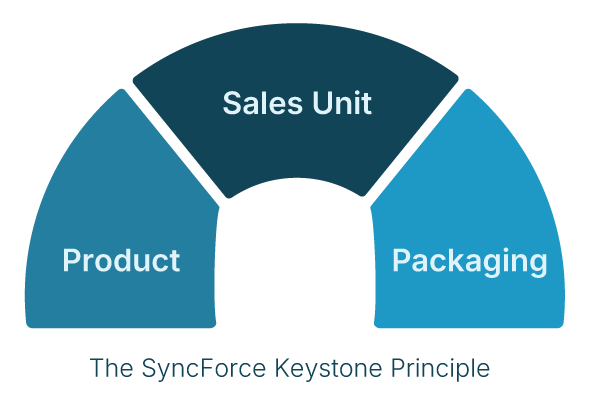
The SyncForce Keystone Principle
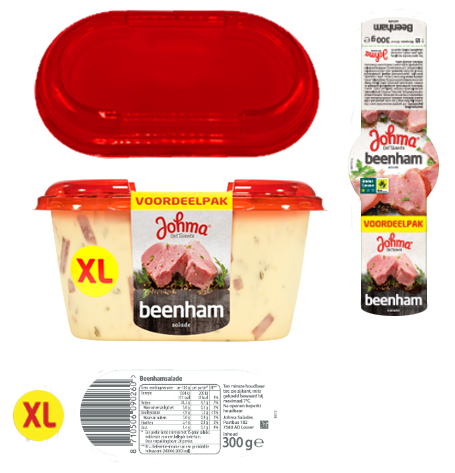
Most systems still treat a “product” as a single object with one set of attributes. In packaged goods, this is not how reality works.
A Sales Unit always combines two things: Product + Packaging.

Product
Product is what delivers value to the end user, whether it is consumable, durable or disposable. It can be food, beverages, pet care, home and personal care, technical or professional products. One Sales Unit can even contain multiple products, for example a laptop and charger, or an assortment of confectionery.
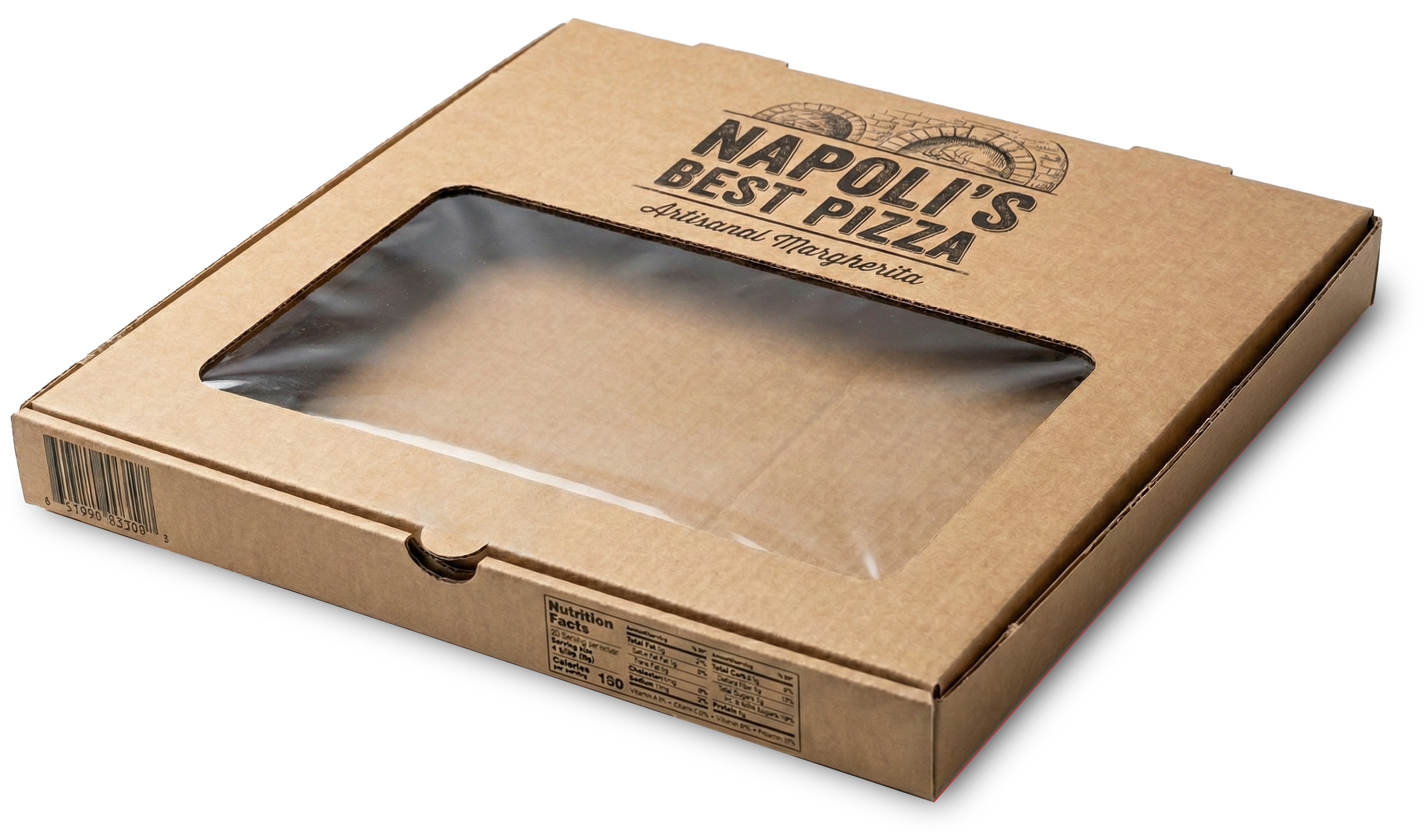
Packaging
Packaging is the complete packaging system that makes the Sales Unit possible. It includes every element needed to contain, protect, transport, present, apply and store the product, for example tube, seal, cap, box and in mould label for a toothpaste, or bottle, label, closure and carrier for beverages.
Until your data model consistently applies Sales Unit = Product + Packaging, every change to either side will continue to generate manual work, duplicated data and local shortcuts.
The keystone principle is the starting point. The next step is to understand how all Sales Units and Transport Units relate to each other in one coherent structure.
The Golden Hierarchy
one language for your full portfolio
The Golden Hierarchy is the core of Data Mastery. It is the authoritative blueprint that mirrors your physical business, from the most granular product and packaging elements up to grouped Sales Units and Transport Stock Units.
It reflects how your portfolio is really built:

Individual Sales Unit(s) (ISU)
The item that carries a consumer or customer facing identifier, for example one tube of toothpaste, one bottle of shampoo or one laptop with charger.
Each ISU applies the keystone principle: Product(s) combined with a complete Sales Packaging system.

Grouped Sales Unit(s) (GSU)
Groups of Individual Sales Units that are sold as one offer, such as six packs, multi-packs, variety packs, mixed bundles or club packs.
Each GSU adds Grouped Packaging on top of the ISUs, for example shrink wrap, carrier, tray or outer box.
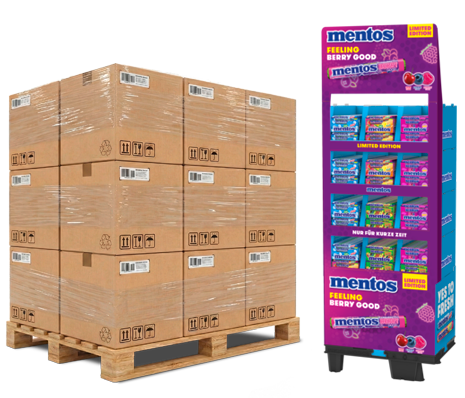
Transport Stock Unit(s) (TSU)
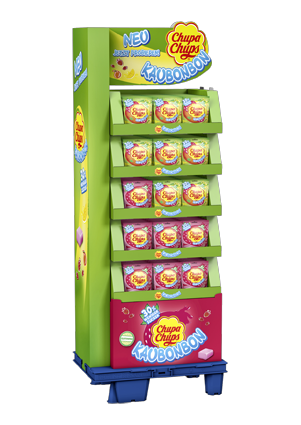
How Sales Units and Grouped Sales Units are combined for logistics, for example outer cartons, layer units, displays and pallets.
Each TSU applies Transport Packaging, such as cases, trays, wraps, corner pieces and pallet bases, often with configurations that differ per market, channel or customer.
A simple example: three different Individual Sales Units are grouped into outers, then into mixed displays, then onto pallets for a specific retailer. The Golden Hierarchy keeps every step of that build visible and connected.
With this hierarchy in place you can:
- Reuse truths, such as one formulation or device used across many Sales Units
- Reuse components, such as one bottle, actuator or carton across many variants and pack sizes
- Understand impact, by seeing immediately which ISUs, GSUs and TSUs are affected by a single change in product, packaging element or rule
The Golden Hierarchy becomes the shared language that everyone can work from, regardless of function or system.
Three dimensions of complexity, one model
Data Mastery gives you one model that can carry the full complexity of packaged goods without collapsing into chaos.
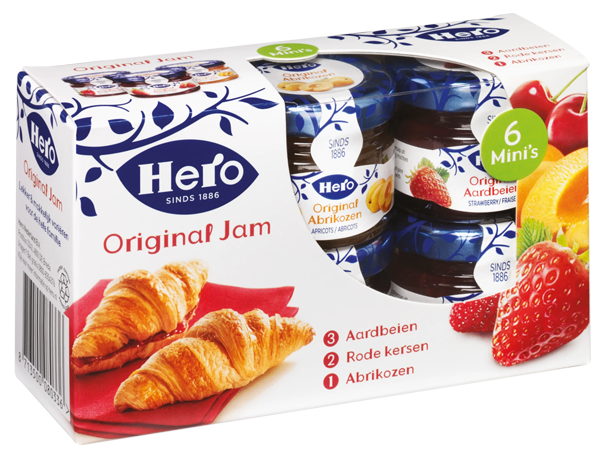
1. Product complexity
You can formally describe and relate:
- Single products with their own labels
- Multi-packs and variety packs that combine different products formulations or assemblies
- Mixed packs where only the outer pack carries information
- Sales Bundles that group separate Sales Units into one commercial offer
Behind this sits structured data for formulations, material composition, ingredient or component lists, performance and safety information, regulatory attributes and claims, all ready to be reused across many Sales Units.
2. Packaging complexity
You can model packaging as it truly is, not as a single attribute:
- Sales, grouped and transport packaging per Sales Unit
- Packaging elements such as bottle, can, jar, cap, lid, label, sleeve, tray, carton, bag or outer case
- Mono materials and composite structures, including layered films and multi material combinations
- Localised packaging variants by market or customer, including languages, icons and mandatory statements
Behind this sits a rapidly growing set of packaging specification, often larger than the product data set itself. This includes material composition, recyclability scores and grades, recycled content by source, weight and dimensions, contact sensitivity, safety and chemical restrictions, deposit and recovery information and other PPWR and EPR related specifications.
This level of structure and depth gives you a solid foundation for PPWR, CSRD and national producer responsibility (EPR) schemes, while keeping all packaging specifications connected to the Sales Units and Transport Units that depend on it.
3. Logistics complexity
You can represent logistics as it actually works, including the transport packaging that appears at every level in the supply chain hierarchy:
- Multiple cases, pallets and displays for the same Sales Unit
- Retailer specific hierarchies and display builds, each with its own pallet configuration
- Additional transport packaging on each level, such as trays, corner protectors, slip sheets, shrink or stretch wrap
- One way export pallets alongside returnable pallets for domestic use
- Club packs, mixed displays and seasonal assortments
The Golden Hierarchy keeps all logistic variants, and their related transport packaging, connected back to the same underlying Product and Packaging truths.
Digital Assets as part of Data Mastery
Mastering data in packaged goods is not only about attributes. It also requires control of the digital assets that represent your Products, Sales Units and packaging in every context.
With SyncForce, Digital Asset Management is part of Data Mastery, not an add on.

Link media assets directly to the Golden Hierarchy
- Product level assets such as brand visuals and usage instructions
- Sales Unit assets such as pack shots, lifestyle images, 3D renders and videos
- Transport Unit assets such as display images, pallet configuration visuals and logistic handling instructions
Manage technical packaging assets
- Artwork files for each packaging element, such as label, sleeve, carton or foil
- Cutter guides, keylines, 3D models and print specifications
- Regulatory and compliance documents linked to specific elements or materials
Reuse assets across the portfolio
- One asset linked to multiple Sales Units, markets or channels
- One artwork file linked to both the Sales Unit and the corresponding case or display
- Language, market and channel variants structured instead of duplicated
Assets are treated as data objects within the same model as Products, Sales Units, Packaging and Transport Units. This keeps your visual and technical assets aligned with the underlying truths they represent.
How we establish your blueprint
Achieving Data Mastery is not a generic implementation exercise. It is a structured way of aligning your digital model with your physical reality.
Step 1 Map your real world into the Golden Hierarchy
Together we translate your current portfolio into the keystone principle Sales Unit = Product + Packaging and the Golden Hierarchy:
- Identify Products, Individual Sales Units, Grouped Sales Units, Transport Stock Units and their packaging
- Map how formulations, components, packaging elements and assets are reused across the portfolio
- Clarify where current systems and spreadsheets hold implicit logic that needs to be made explicit
Step 2 Define sources of truth and key rules
We then define how information flows into the blueprint:
- Decide which systems are source of truth for which data and assets
- Connect PLM, ERP, laboratory systems, design tools and asset repositories into a coherent model
- Model the attributes required for circularity, sustainability and compliance at the right level in the hierarchy
Once the blueprint is in place, it becomes the stable centre that keeps your digital representation aligned with your physical world, even as systems and channels evolve around it.
What Data Mastery delivers
When Data Mastery is in place, leaders in packaged goods experience a different reality.
For your organisation
- One shared portfolio language for Supply Chain, Quality, R&D, Packaging, Commerce and Data teams
- Fewer side spreadsheets and parallel databases
- Clear ownership of data and assets, with less debate about which version is correct
For your operations
- Faster and more consistent creation and update of Products, Sales Units, packs and hierarchies
- Immediate visibility of impact when changing a formulation, component, packaging element, claim or asset
- A robust data and asset foundation for PPWR, EPR, CSRD and category specific rules
For your commercial and market teams
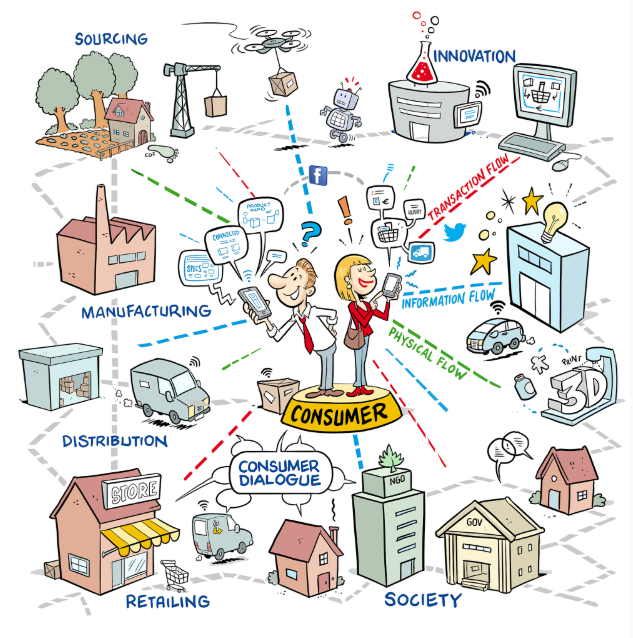
- Confidence that every internal and external stakeholder sees the same coherent picture of each Sales Unit
- Fewer data and asset related rejections or delays in customer onboarding
- More time for category value creation, less time on data and content firefighting
Most importantly, your digital picture of the world finally matches your physical one, across both structured data and digital assets.
Next step: move from complexity to clarity
If you recognise your organisation in this description, Data Mastery is the logical first step.
- Start with a conversation about your current product, packaging, hierarchy and asset challenges
- Explore how the Golden Hierarchy and the keystone principle Sales Unit = Product + Packaging would look for your portfolio
- Decide how a single, authoritative blueprint for data and digital assets can support your roadmap
SyncForce Circular PIM provides the structure and control to bring packaged goods to market with confidence, on time and in full, digitally and physically.