How we make it practical in SyncForce Circular PIM
Under the EU Packaging and Packaging Waste Regulation (PPWR), recyclability is no longer a nice to have. It becomes a market access requirement, with clear milestones and a formal performance grading system. The challenge is that “recyclable” is not a single attribute. It is a structured conclusion, built from packaging composition, evidence, and market specific recycling realities.

What PPWR means by “recyclable packaging”
PPWR Article 6 defines recyclable packaging using two pillars:
- Designed for recycling (DfR)
Your packaging must meet EU Design for Recycling criteria that the European Commission will publish. - Recycled at scale
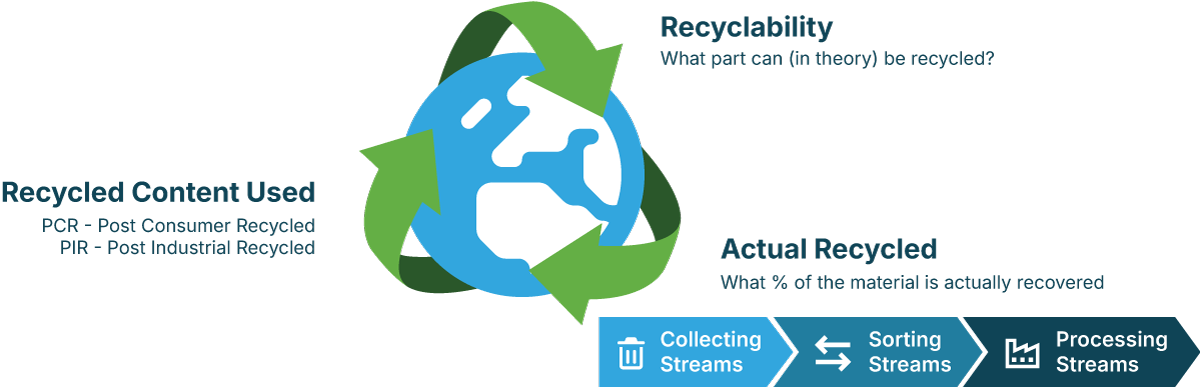
When the packaging becomes waste, it must be collectable, sortable, and recyclable at scale, based on an EU methodology. In other words: it is not enough that a design looks recyclable on paper. It must also work in real world collection and sorting systems.
PPWR also introduces EU recyclability performance grades (A, B, C, and later tighter market restrictions). This is important because it shifts the discussion from “recyclable yes or no” to “how recyclable, and is the grade still allowed on the market”.
PPWR recyclability timeline: what happens when
The key dates from the PPWR article timeline are:
- By 1 January 2028: the Commission must adopt delegated acts that define the Design for Recycling criteria and the grading approach.
- By 1 January 2030: the Commission must adopt implementing acts defining the “recycled at scale” methodology and chain of custody mechanism.
- From 1 January 2030 (or 24 months after the DfR delegated acts enter into force, whichever is later): packaging cannot be placed on the market unless it is recyclable in grades A, B, or C.
- From 1 January 2038: packaging cannot be placed on the market unless it is recyclable in grades A or B.
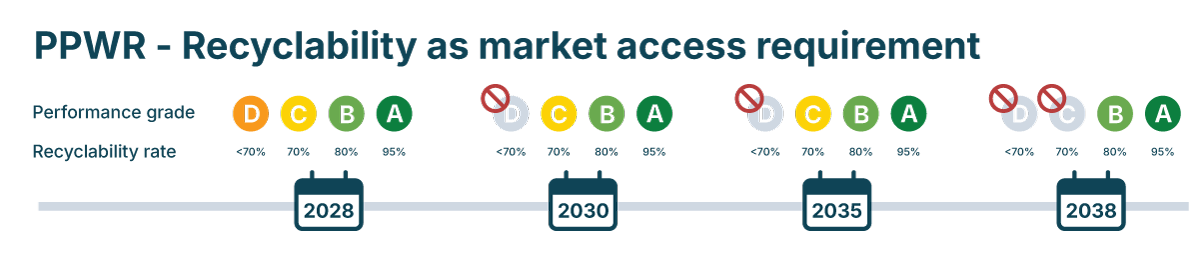
Practical takeaway: you can and should prepare the data now, but the final EU grading logic becomes concrete when the delegated acts arrive (targeted for 2028).
The data reality: “DfR” is not the same as “recyclable in market”
Many teams treat recyclability as a single flag on a pack. PPWR makes that approach fragile for two reasons:
- The design assessment is EU wide, but outcomes can vary by market
A design can be acceptable in one country’s sorting system and downgraded in another because the collection stream, sorting technology, or end markets differ. - You need evidence and traceability
Recyclability becomes part of a regulated compliance story. That requires controlled data, versioning, and the ability to explain how a conclusion was reached.
So we separate two things:
- DfR readiness: is this material line designed to be recyclable according to today’s accepted standards
- Market recyclability: is it actually recyclable in a specific country or region, based on real world collection and processing realities
Our approach in SyncForce: DfR now, PPWR grades when the EU rulebook is final
1. Start with a practical DfR indicator you can use today
Today, we support a Design for Recycling indicator per material line, with values:
- Unknown
- Yes
- No
It is a controlled field, defaulting to Unknown, and it applies at a global level at the material line.
The guideline is clear: selecting “Yes” confirms the material can be identified, sorted, and processed within current industrial recycling streams, aligned with ISO 18604 and EN 13430.
Why this matters: ISO 18604 and EN 13430 remain the working “language” used across the packaging value chain today, and they provide a realistic bridge to PPWR until the delegated acts are published.
2. Then capture “recyclable in market” as a market specific conclusion
Recyclability under PPWR is not only about design. It must hold up when the packaging becomes waste.
That is why we support a market recyclability outcome per country or region, stored as a conclusion that matches real world outcomes for that market.
This is also the value you totalise for reporting, because it reflects what happens in practice, not only what is intended by design.
3. Treat “Unknown” as a managed risk, not a silent gap
A typical issue in recyclability projects is that “unknown” becomes invisible until the last moment.
In our setup, “Unknown” has clear behaviour:
- No market recyclability panel is shown
- Material weight is excluded from recyclable totals
- It is flagged in completeness dashboards
This is important because it drives practical progress: teams can see where evidence or assessments are missing, by packaging assembly unit and by sales and transport units.
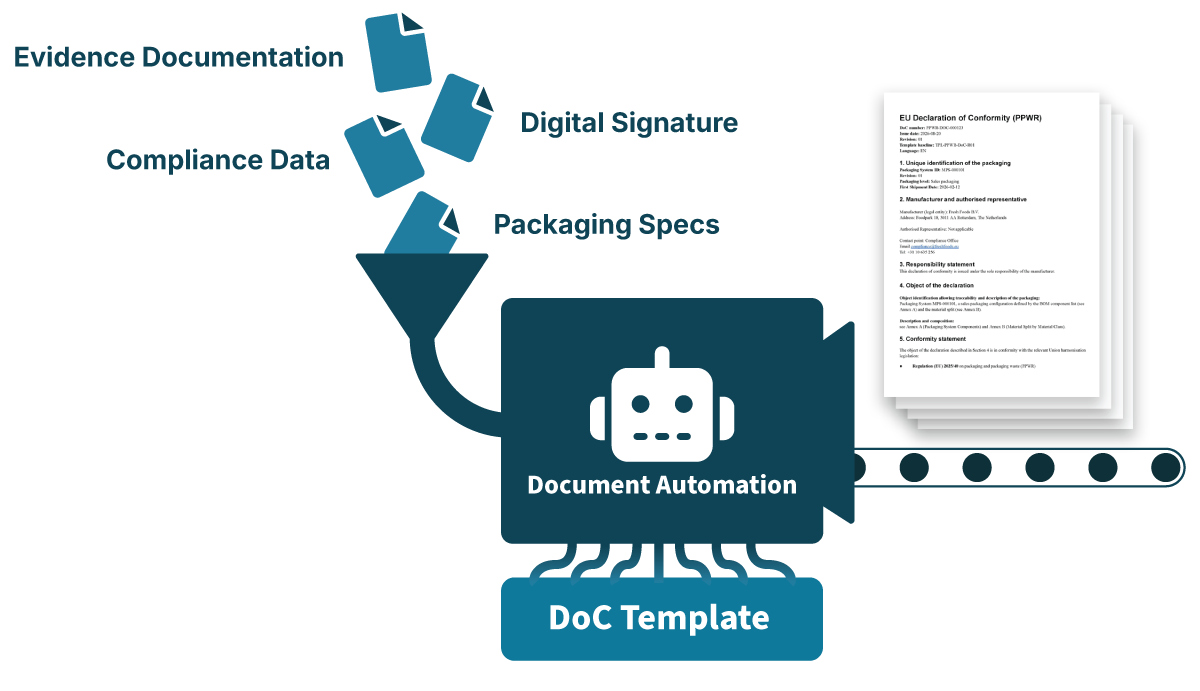
4. Prepare for audit style reporting and the Declaration of Conformity
While PPWR recyclability grades start later, recyclability is part of a broader PPWR compliance story that requires evidence, decisions, and traceability.
We support reporting and conversion views such as:
- Reporting on packaging assembly units with the percentage of material lines still set to Unknown
- Reporting on sales and transport units with unknown packaging lines, to drive readiness programmes and decision making
What changes when the PPWR delegated acts arrive
PPWR shifts methodology in three major ways:
- It becomes mandatory, not guidance
- It moves from a binary outcome to a ranked grading system
- It introduces more explicit quantitative thresholds and tighter market restrictions over time
Our roadmap approach is straightforward:
- Now: use ISO 18604 and EN 13430 aligned DfR readiness indicators to build a clean and complete packaging data foundation
- When the delegated acts are adopted (target 1 January 2028): transition from voluntary ISO based assessments to the official PPWR EU performance grades (A to E), mapping existing indicators and underlying data directly into the formal PPWR methodology
This avoids rework. The data you capture now remains useful, because the hard part is not the final grade label. The hard part is having reliable packaging composition and decision evidence at the right level of the packaging structure.
What you can do now to be ready for PPWR recyclability
A practical checklist for packaging teams:
- Ensure packaging is modelled as structure, not attributes
Recyclability depends on materials across packaging components, not on a single pack level field. - Capture material line level specs with controlled values
Start with DfR readiness per material line and make Unknown visible. - Record market outcomes where they differ
If recyclability depends on the market’s collection and sorting reality, store it explicitly by country or region. - Build reporting that drives closure
Completeness reporting is as important as the assessment itself. It turns a complex requirement into a managed programme.
Closing
PPWR recyclability will be decided by EU rules, but it will be delivered by your packaging data. The best way to prepare is to build a data model that separates DfR readiness from market recyclability, makes Unknown visible, and keeps evidence and decisions tied to the packaging structure.